PCB Prototype Assembly Be Optimized For Faster Turnarounds
PCB prototype assembly enables designers and engineers to transform theoretical schematics into functional boards with components soldered on. This bridges the gap between prototype pcb assembly fabrication and product manufacturing, and is an essential process in enabling product development teams to verify that their design meets functionality and specification requirements. As such, achieving quick turnarounds while still maintaining quality is critical for project success. This article outlines how PCB prototype assembly can be optimized for faster turnarounds, including ways to balance cost and speed with quality considerations.
Identifying and sourcing the best components for your prototypes is key to meeting fast-turnaround production needs. This involves using a trusted supplier with extensive relationships with suppliers to ensure that the most suitable components are available when needed. Additionally, choosing the right materials is also important. PCBs are made from a variety of materials, and selecting the best material for your particular application can help reduce assembly time.
The surface finish on a PCB is another significant factor in determining the time required for prototyping. Choosing a HASL or ENIG finish that requires minimal time for deposition can significantly cut down on the assembly process. Similarly, choosing a component-specific solder mask can further decrease the amount of time required to assemble a board.
When selecting a PCB manufacturer, make sure that they offer fast-turnaround services and have the capacity to handle your project volume. This may require paying a premium price for expedited processing, but can be worthwhile if the ability to meet your turnaround time is crucial.
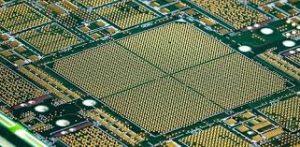
How Can PCB Prototype Assembly Be Optimized For Faster Turnarounds?
Consider supplying your own parts to avoid additional procurement time and costs, or choose a component selection option that allows the manufacturer to use standard parts for quicker fabrication and shipment. Keeping the bill of materials as short as possible can also help to minimize assembly time. Designing for automated assembly and eliminating through-hole components can further increase the efficiency of your prototyping order. Thoroughly documenting your designs and clearly marking orders as prototypes can speed up the review process and avoid back-and-forth delays.
For the absolute fastest turnarounds, consider using a PCB manufacturer that can provide prototypes in-house. Having all the steps of fabrication and assembly in-house can dramatically reduce turnaround times, especially when dealing with high-volume prototyping. Alternatively, if the project scope is not too extensive, consider working with a manufacturer that can provide you with a rapid-turn service with an external PCB assembly partner to save on time and resources.
Once the PCBs are fabricated and assembled, they should be subjected to functional testing to ensure that all components are connected properly and that the board functions as expected. This is a critical step for ensuring that your design will function as intended, and it should be performed by a professional to avoid costly mistakes. If the results of the functional test are satisfactory, then the finalized PCBs can be ready for full-spec production. If not, a new design iteration can be quickly ordered and produced to improve the performance of the prototype.