
Actor Liam Neeson recently confessed in a podcast that he had absolutely no idea what a Labubu was — despite the tiny monster dolls having become a global cultural phenomenon worth billions. His puzzlement must be mirrored by brand strategists who probably cannot wrap their heads around the way brand ecosystems have emerged championed by Gen Z and Alpha consumers around products they’ve barely encountered.
This disconnect becomes particularly stark when examining India’s rapidly evolving toys and games market, where established international players like Hamleys, Mattel, and Hasbro dominate shelves even as a new generation of consumers develops intense, if fleeting, emotional connections with brands that seem to emerge from nowhere and disappear just as quickly.
Untapped potential
India’s toys and games market, projected to generate $1.8 billion in 2025 with 4.69 per cent annual growth, significantly outpaces the global 2.42 per cent average. Yet per capita spending is just $1.24 versus the global $17.01, revealing massive untapped potential as India’s growing middle-class drives demand for educational toys and board games.
Reliance’s 2019 buyout of British toy retailer Hamleys for $88.5 million marked India’s first overseas retail brand purchase, and demonstrated the potential for international toy brands in the country through local partnerships.
India’s fragmented industry of 800 manufacturers and 4,000 MSMEs features traditional players like Funskool alongside global giants. Government initiatives — including 60 per cent import duties, quality certification requirements, and the Prime Minister’s call for start-ups to create toys reflecting Indian values — signal strong policy support for indigenous innovation.
The challenge lies not in market potential, but in understanding how to capture the imagination of consumers who have fundamentally different relationships with brands than previous generations.
Just can’t ‘LEGO’
LEGO from Denmark has achieved something remarkable in creating what psychologists call “nostalgic brand attachment” — users don’t just buy LEGO sets, they’re purchasing pieces of their childhood while creating new memories. This taps into the endowment effect, a tendency to overvalue things we already own.
Over the past two decades, LEGO’s revenue has grown ten-fold, reaching $9.7 billion dollars in 2023, making it the world’s largest toymaker. The secret lies in their approach to adult fans of LEGO (AFOLs), who now account for one-fifth of sales. The company produces more than 140 elaborate sets specifically for adults, some containing thousands of pieces, while maintaining appeal for children through digital partnerships like their collaboration with video-game maker Epic Games for experiences in the game Fortnite.
Over the past two decades, LEGO’s revenue has grown ten-fold, reaching $9.7 billion dollars in 2023, making it the world’s largest toymaker
| Photo Credit: Getty Images
For Indian toy manufacturers, LEGO’s success demonstrates that lasting brand love requires both stability and surprise — familiar enough to feel secure, novel enough to remain engaging across life stages.
Plushie phenomenon
Global trends reveal fascinating insights about contemporary toy consumption. The soft toy category has witnessed explosive growth, with videos tagged #Plushies accumulating over 8 billion views on TikTok. What’s remarkable is that “kidults” aged 12 and above now account for over a quarter of toy sales, surpassing pre-schoolers for the first time. This trend, which began during the pandemic as young adults sought comfort in cute playthings, has created a new consumer category that brands are scrambling to understand.
The phenomenon extends beyond simple nostalgia. Adults now spend significantly more on toys for themselves than for pre-schoolers, sometimes thousands of dollars within months. The appeal stems from anticipation rewards — the mystery and surprise elements of blind box toys (where the consumer does not know which toy is inside) that generate dopamine-driven excitement and collection satisfaction.
Psychologists note that plushie collecting represents a form of comfort consumption and nostalgia-driven purchasing, while public figures across entertainment and sports have normalised adult toy collecting through social media visibility. This adult adoption of traditionally child-focused products reflects deeper cultural shifts that Indian toy brands must navigate carefully.
Understanding the Labubu generation
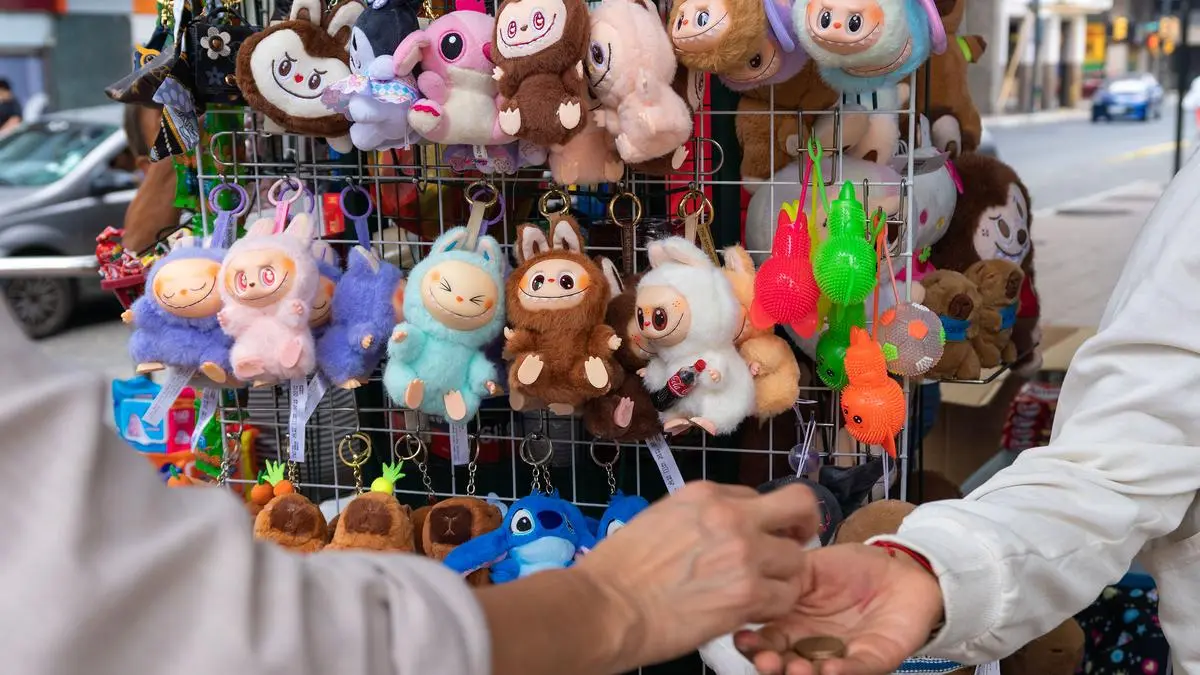
The emergence of phenomena like Labubu dolls — those grinning, elfin creatures with fuzzy outfits — reveals crucial insights about contemporary brand relationships. These consumers don’t simply purchase products; they curate identities through carefully selected brand assemblages. Each purchase signals values, aesthetics, and group identity.
In India, this manifests in the rise of anime and manga-influenced fashion and lifestyle products. Brands like Uniqlo have collaborated with manga series like Dragon Ball Z, while luxury houses like Gucci have featured characters like Doraemon in collections. The prominence of anime culture in fashion landscapes reflects GenZ’s comfort with global-local hybrid identities.
The performative aspect cannot be ignored. Social media has created consumers who thoughtfully design their aesthetic choices to reflect personal values and social connections. This involves strategic selection across categories — from accessories and beverages to entertainment and collectibles — building cohesive identity narratives. The key insight for brands is that consumption has become a form of identity performance, not just utility satisfaction.
Loyalty rewards
Brand love in the toy sector operates differently from other categories. It transforms brand-loyal customers into advocates and influencers, forging emotional connections that inspire what marketers call “loyalty beyond reason”. Research suggests brand love can precede or follow loyalty — sometimes right before a purchase.
For toy brands targeting Indian consumers, this emotional connection must navigate cultural nuances carefully. Young Indians exist at the intersection of global digital culture and deeply rooted local traditions. They might collect international character merchandise while celebrating traditional festivals, or embrace global gaming culture while maintaining strong family connections.
There are clues to the evolution of this cultural phenomenon. In the 1990s, the Japanese animated adaptation of Ramayana became a beloved television staple, broadcast annually on Doordarshan during Diwali and later on Cartoon Network, creating a generation comfortable with cross-cultural mythological storytelling. The recent success of ‘Mahavatar Narsimha’, which became India’s highest-grossing animated film, demonstrates how this cultural openness has now fully matured into a sophisticated market dynamic.
Effective engagement requires glocalisation — adapting global phenomena to local contexts that feel familiar yet aspirational. This cultural dexterity becomes particularly important in a market where nine out of ten GenZ consumers express pride in buying Indian brands, according to surveys.
Experience economy
Young consumers have elevated activities into hyper-personalised experiences. In the toy context, this translates to elaborate unboxing videos, themed collection displays, and community-building around shared interests. The excitement lies not just in ownership but in the ritual of discovery and the social sharing of that moment. Indian toy brands can leverage this by creating products that generate shareable moments. This might involve innovative packaging that becomes part of the play experience, limited edition releases or toys that evolve over time (remember Tamagotchi’s digital pets?) providing ongoing content opportunities.
Strategic implications
Toy brands seeking to capture Indian consumers’ imagination and spending power need to embrace cultural code-switching. Successful brands must adapt messaging for festivals, regional preferences, and local contexts while maintaining global appeal. This requires vernacular fluency that recognises English-first doesn’t mean English-only, and community building that honours both global trends and local traditions.
Second, a consumer’s relationship with a toy evolves from childhood through adolescence to adulthood. Brands must layer engagement — trends for newcomers, deeper experiences for loyalists — while building communities that accommodate changing interests and life stages.
Third, leverage the exposure effect as people develop preferences for things they encounter frequently. However, familiarity must be balanced with novelty to avoid staleness. Successful brands maintain consistent core identities while continuously refreshing their offerings. Also, embrace consumer fickleness as the norm — brand love today is like a playlist, constantly updated and refreshed, and smart brands adapt to that rhythm instead of resisting it.
The future of toy brands in India isn’t just about predicting the next Labubu or creating the next LEGO. It’s about building a brand context that can sustain connections with consumers who see consumption as both entertainment and identity expression. This requires investment in real-time cultural listening and rapid response capabilities, creating brand experiences that reward both discovery and loyalty.
(Manoshij Banerjee is an independent consultant on digital culture and behaviour; Mohammed Shahid Abdulla is a faculty member, IIM Kozhikode)
Published on September 8, 2025